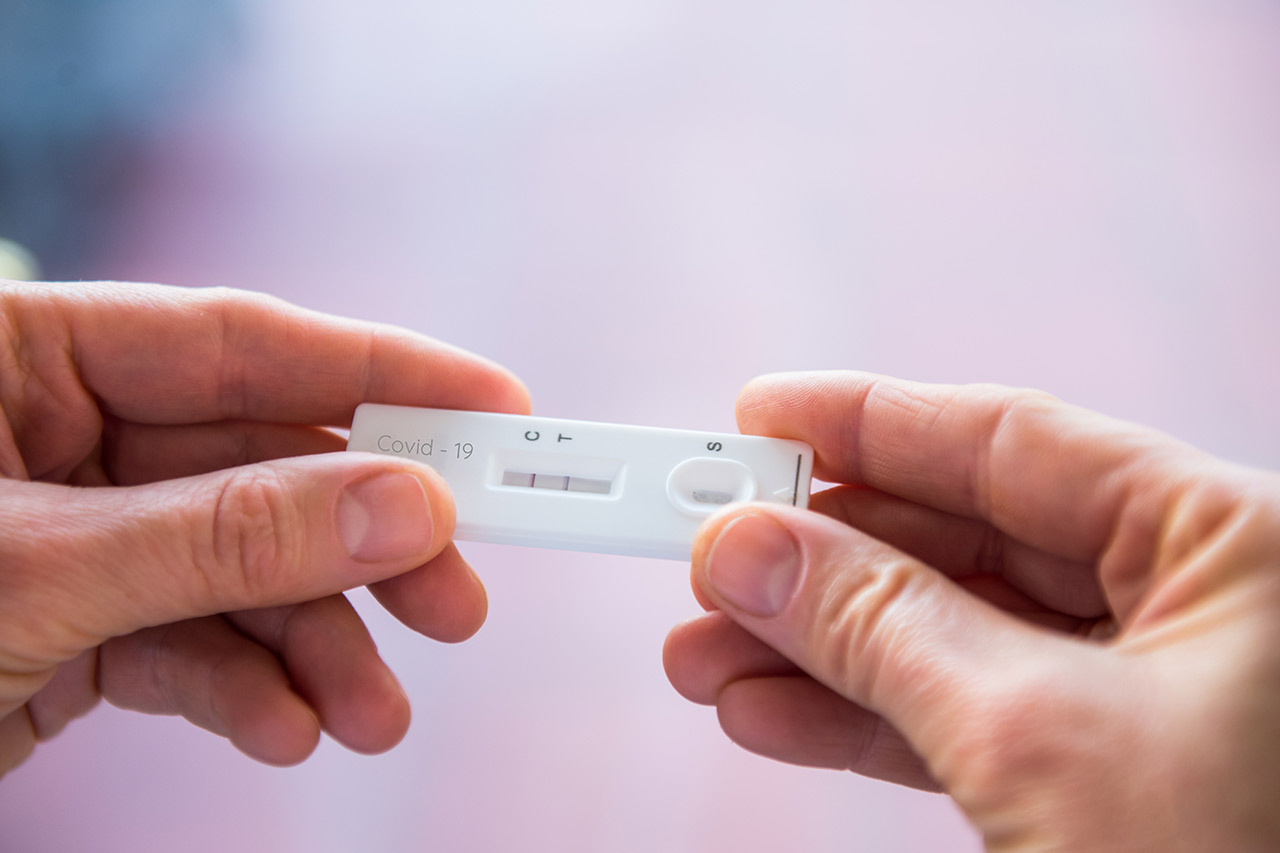
What are the benefits of deploying PoC testing in unscheduled care centers and off-hours medical care facilities?
PoC testing represents a genuine opportunity to transform care pathways today. Here are the main benefits associated with the roll-out of point-of-care testing:
- Results available within minutes: turnaround times for traditional biological test results remain highly variable today. These disparities stem from several factors: the local context of healthcare facilities, the ability to collect samples on site, the availability and turnaround times of couriers picking up samples, and laboratory opening hours, particularly on weekends and evenings. PoC testing stands out for its speed, delivering results to the healthcare professional within about fifteen minutes. This advantage is especially valuable in rural areas, which often face medical deserts and are far from emergency services.
- A more streamlined patient pathway: point-of-care testing improves the precision of patient care. When a clinical exam alone does not allow for a reliable diagnosis, it supports a faster, better-informed decision regarding which additional tests to order and where to direct the patient. For example, in an unscheduled care center, a point-of-care troponin test can, in some cases, help rule out or confirm a heart attack. This approach helps simplify patient triage and avoid unnecessary referrals to the emergency room. It can also reduce the use of probabilistic treatments sometimes prescribed while awaiting biological test results. As a result, healthcare professionals can direct patients more quickly to the most appropriate level of care.
- A contribution to more efficient healthcare spending: PoC testing can help improve the allocation of public healthcare resources. In some cases, they enable complete patient management without requiring emergency services, thereby reducing the use of costly resources (round-the-clock staffing, expensive equipment, facilities, additional tests, etc.). By extension, the use of PoC testing may help reduce the use of certain emergency transport services between outpatient facilities and hospitals. Moreover, by integrating biological testing into a single point of care that also includes consultation, diagnosis, and further examinations, PoC testing improves the efficiency of outpatient medicine and may help lower overall costs.
Discover how to optimize patient pathways >
What are the challenges involved in deploying PoC testing in these facilities?
Despite their clear benefits, the large-scale roll-out of PoC testing in France faces a number of challenges:
A financial challenge for laboratories
Currently, PoC testing is reimbursed by National Health Insurance (Assurance Maladie) at the same rate as tests performed in a laboratory. This pricing equivalence does not cover implementation and operating costs, which are absorbed by medical diagnotic laboratories.
Several costs need to be taken into account to understand the overall burden on diagnostic laboratories:
- The initial investment: many players in the diagnostics industry now offer point-of-care testing analyzers, including Abbott, Roche Diagnostics, Siemens, and bioMérieux. These devices represent a significant investment for diagnostic laboratories.
- Low test volumes: in unscheduled care centers and off-hours medical care facilities, tests that can be performed via PoC testing account for only a small share of all biological tests requested, since PoC testing is designed to meet the need for biological results in urgent situations. This limited market share is likely to prevent laboratories from achieving economies of scale on reagents and recouping their investments.
The list of authorized tests does not cover all tests used in emergency settings
The order of February 4, 2026 authorizes the analytical phase of certain tests that are essential for medical practices and unscheduled care centers. These include the troponin test mentioned earlier, D-dimer testing, useful in cases of suspected deep vein thrombosis or pulmonary embolism, and creatinine testing, required before a contrast-enhanced CT scan. However, the order excludes tests that could be highly useful for unscheduled care, such as C-reactive protein testing, which measures inflammation levels. This limitation restricts healthcare professionals’ diagnostic capabilities.
What is the future of point-of-care testing in France?
Despite the obstacles to its widespread adoption, PoC testing has every chance of becoming a permanent fixture of the future medical landscape, particularly in the new settings authorized by recent regulatory changes. Indeed, it offers major benefits for stakeholders by improving patient care, streamlining healthcare workflows, and making better use of healthcare resources.
That being said, numerous strategic challenges currently remain for diagnostics companies, medical diagnostic laboratories, and healthcare professionals. A coordinated approach among these different players is essential to overcome these obstacles and ensure the long-term success of decentralized medical biology testing (PoC testing). Don’t hesitate to contact our team to discuss this topic in more detail!
About the author,
Ambre, Consultant in Alcimed’s Life Sciences team in France.