Click chemistry: a breakthrough for in vivo molecular labeling
Awarded the Nobel Prize in Chemistry in 2022, click chemistry has transformed the way we label biomolecules in complex environments, enabling the study of their localization and interactions directly within living systems. This approach relies on fast, selective, and biocompatible chemical reactions that allow two molecules to be assembled like LEGO bricks—even within a living organism. In a sense, these two molecules are molecular “soulmates”: regardless of environmental complexity, they find each other through an exclusive affinity.
From these so-called “bioorthogonal” reactions (as they do not interfere with natural biological processes) have emerged bioorthogonal probes: true in vivo labeling tools. These probes combine a target biomolecule, tagged with a small chemical group, with a probe carrying a complementary group. When they react, a signal—often fluorescent—is activated, enabling highly specific visualization. Unlike conventional probes, which are often invasive or poorly selective, these new fluorogenic probes only activate upon binding, dramatically improving resolution.
Thanks to these advances, it is now possible to label biomolecules in vivo that were previously inaccessible, such as glycans and lipids, with unprecedented precision. Until now, labeling glycans and lipids in living systems was challenging because existing techniques relied primarily on genetic modification—an approach that is not feasible for these biomolecules, as they are not genetically encoded. As a result, bioorthogonal probes are generating significant interest in medicine. Their ability to selectively label biological molecules without disrupting their environment or function enables intervention at the very core of biological processes with unmatched precision, revealing previously inaccessible targets. These probes are opening up groundbreaking opportunities in imaging, diagnostics, and therapy.
A field still in rapid expansion
Four years after the Nobel Prize was awarded, click chemistry is far from reaching its full potential. On the contrary, it continues to reshape the field of chemistry, driven by a wave of innovations that push its boundaries every day. New reaction variants—faster, more biocompatible, or activatable on demand—are now enabling applications that would have been unimaginable just a few years ago.
Three highly promising applications of bioorthogonal probes in oncology
In vivo tumor imaging
In oncologic surgery, complete tumor resection is essential to reduce the risk of recurrence. However, it remains difficult to precisely distinguish the boundaries between healthy and tumor tissues. Fluorescence-guided surgery (FGS) is emerging as a breakthrough technology: by injecting specific fluorescent probes prior to surgery, surgeons can visualize cancer cells in real time and refine surgical precision. The global FGS market is expected to grow at a compound annual rate of 14.1% through 2030.
Among currently available technologies, indocyanine green—marketed in particular by Diagnostic Green—is used today to identify well-vascularized tissues, including certain tumors. Other probes, still in clinical development, rely on monoclonal antibodies conjugated with fluorophores. While these solutions represent an important first step, they remain limited by insufficient specificity, high background noise, and limited control over activation.
Bioorthogonal probes overcome these limitations. Inert within biological environments, they generate no background signal and become fluorescent only at the precise moment they encounter their target, through a rapid and highly selective chemical reaction. The result is ultra-precise visualization of tumor cells, without interference from surrounding healthy tissue. Although no bioorthogonal probe has yet reached the clinical stage for in vivo tumor imaging, the field is advancing rapidly. Many probes are currently in advanced preclinical development, with promising results demonstrated in ex vivo human tumor tissues and in vivo mouse studies. Some have even achieved 100% specificity in detecting tumor cells, particularly in breast cancer.
Targeted drug delivery
In cancer therapy, targeted drug delivery is critical to maximize efficacy while minimizing side effects. Among current solutions, antibody-drug conjugates (ADCs) have shown strong potential, particularly due to their ability to selectively target tumor cells. However, they still face several limitations: the development of resistance over time, non-specific cytotoxicity, and manufacturing complexity (see our related article on ADCs).
Read also: Why do antibody drug conjugates hold such promise for the future of cancer treatment?
Bioorthogonal probes represent a breakthrough innovation in targeted delivery. They enable the precise release of active compounds exclusively at the tumor site, through highly selective chemical reactions that are inert to the biological environment. This specificity drastically reduces systemic toxicity and improves the benefit-risk profile for patients.
One example is the CAPAC (Click Activated Protodrugs Against Cancer) platform, developed by the startup Shasqi. Its mechanism is particularly elegant: it uses a molecule bound to a drug that is specifically designed to react selectively with the tumor. This technology marks the first use of click chemistry in vivo in cancer patients.
This strategy can be further enhanced by activatable photodynamic therapies. In these approaches, the drug is activated by an external light source, triggering its action only when the probe is in close proximity to the tumor. Bioorthogonal probes play a dual role here: they ensure specific targeting of tumor cells and enable precise activation of the treatment at the point of contact through light emission. Some fluorogenic probes emit light at a specific wavelength capable of activating the therapeutic molecule exclusively at the tumor site, further reducing side effects.
Targeted drug delivery using bioorthogonal probes is progressing rapidly. Shasqi’s CAPAC platform is in advanced clinical development, having demonstrated promising results in Phase 1 trials and progressed into Phase 2. Although the combination of these probes with photodynamic therapies is still at the preclinical stage, this approach represents a comprehensive solution for delivering drugs precisely to the tumor while minimizing systemic side effects.
Cell therapy
Cell therapies, particularly those based on macrophages or T cells, offer promising perspectives for treating a wide range of diseases, including cancer. However, one of the major challenges remains the ability to precisely guide these cells to target tissues and enhance their efficacy once they arrive.
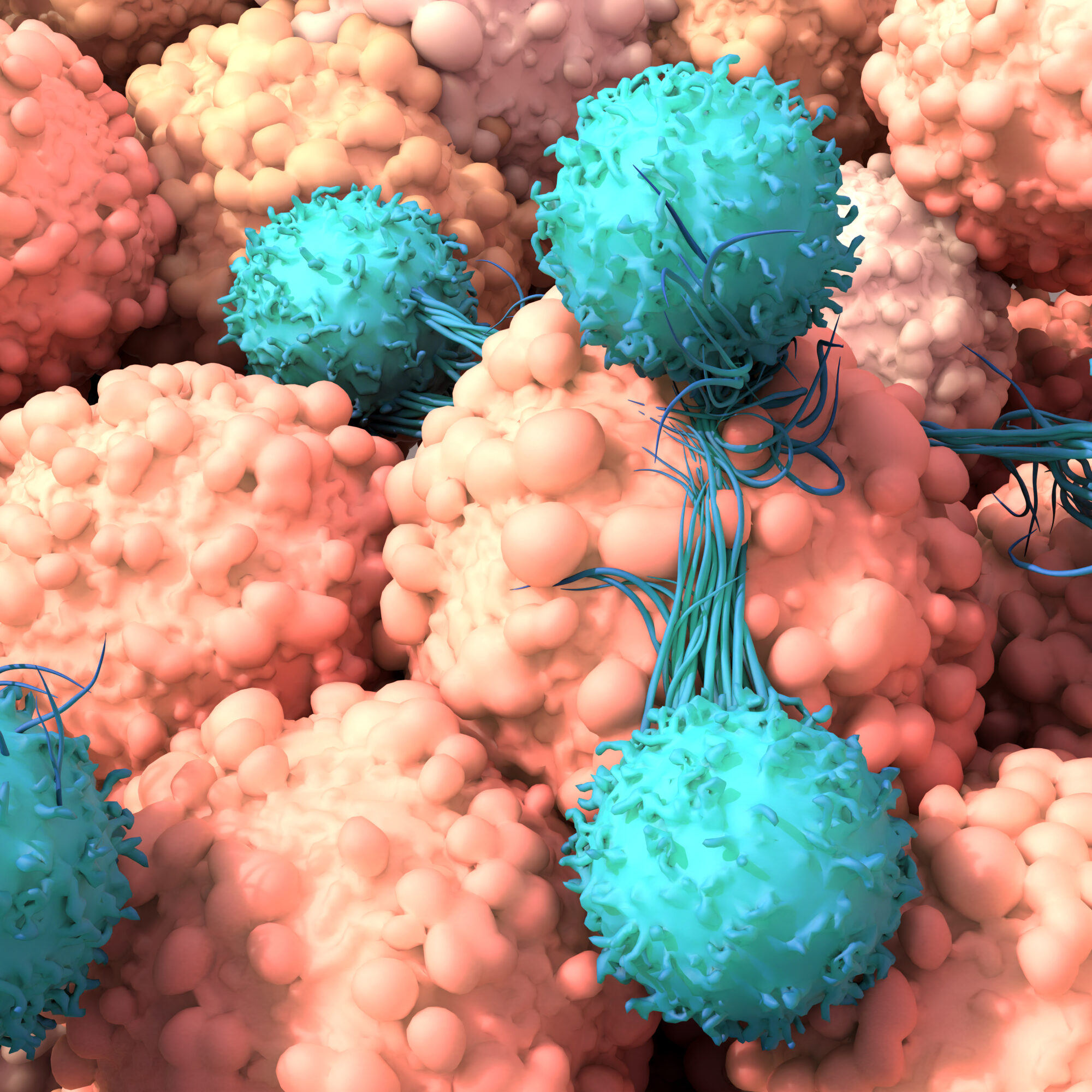
Bioorthogonal probes provide an innovative solution to this challenge. By modifying the surface of therapeutic cells (such as macrophages or T cells) and target cells (such as tumor cells) with complementary chemical groups, it is possible to promote intercellular interactions. This chemical recognition increases the accumulation and adhesion of therapeutic cells to target cells, for example enhancing the phagocytic activity of macrophages against tumors. In addition, these probes can be designed to generate a fluorescent signal only when interactions occur between modified cells. This enables precise localization and visualization of therapeutic activity, paving the way for in vivo monitoring of cell–cell interactions. Bioorthogonal probes thus become a powerful lever for improving the precision and effectiveness of cell therapies.
No such cell therapies are currently commercialized, but several highly promising candidates are already in clinical development, demonstrating the strong potential of these approaches. This is notably the case for Acepodia®, whose candidates ACE1831 and ACE2016 are currently in Phase 1 clinical trials. These treatments leverage bioorthogonal chemistry to conjugate T cells with tumor cells, facilitating targeted interactions and triggering a strong immune response to eliminate cancer cells.
Bioorthogonal probes offer transformative potential in oncology, as illustrated by their promising applications in tumor imaging, targeted drug delivery, and cell therapy. Their ability to react selectively within complex biological environments paves the way for more precise and less invasive treatments. Since the 2022 Nobel Prize in Chemistry, this growth trajectory is expected to accelerate significantly over the coming decade.
Although none of these solutions are yet commercially available, several highly promising candidates are already in clinical development. The steadily increasing number of candidates suggests a gradual market entry for bioorthogonal probes in the years ahead. At Alcimed, we will keep you informed of the latest developments in this exciting field. If you have a project in this area—or more broadly, if you are seeking healthcare applications for your innovative technology—please feel free to contact our team.
About the author,
Mathieu, Consultant in Alcimed’s Life Sciences team in France